
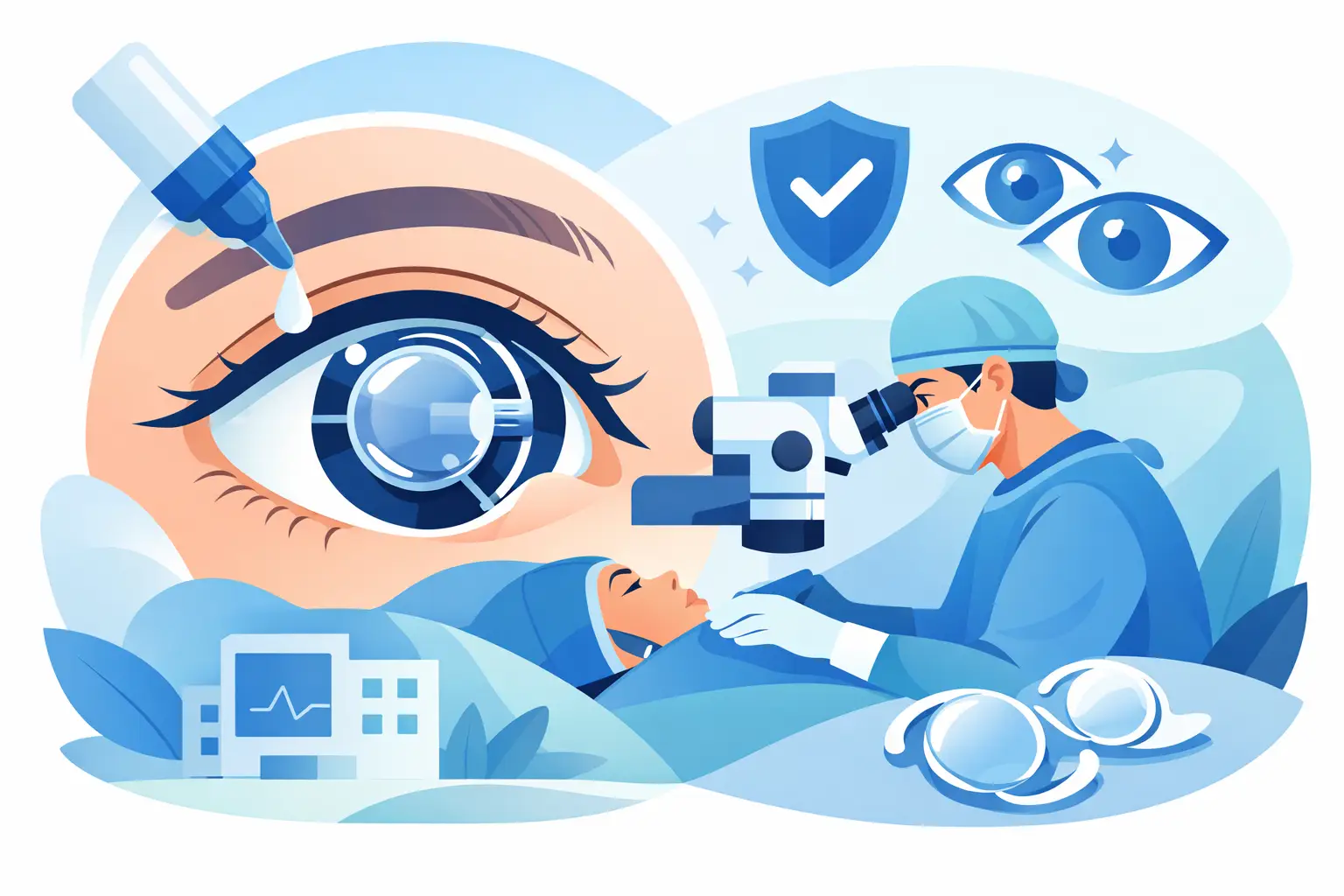
For many people in their fifties, sixties and beyond, the frustration is familiar: glasses for reading, glasses for driving, and perhaps contact lenses that no longer feel comfortable. But when the solution involves surgery on your eyes, the first question is rightly, is lens replacement surgery safe? For suitable patients, it is a well-established procedure with a strong safety record. It is not risk-free, however, and the safest decision is one based on a detailed examination, an experienced surgeon and realistic expectations.
Is lens replacement surgery safe for most patients?
Lens replacement surgery, also called refractive lens exchange (RLE), removes the eye’s natural lens and replaces it with a clear artificial intraocular lens, or IOL. The operation uses the same core technique as modern cataract surgery, one of the most commonly performed operations worldwide.
During the procedure, the surgeon makes a very small incision, gently breaks up and removes the natural lens, then places the selected IOL inside the lens capsule. It is usually carried out under local anaesthetic with numbing eye drops. Most patients are awake but comfortable, and treatment for each eye normally takes around 15 to 20 minutes.
Safety is not simply a matter of the operation itself. It depends on whether the procedure is appropriate for your eyes, the accuracy of the pre-operative measurements, the lens selected, the surgeon’s experience and how carefully you follow aftercare instructions. This is why a reputable clinic will not recommend treatment solely from a glasses prescription or a short online questionnaire.
Why patients choose lens replacement surgery
Unlike laser eye surgery, which reshapes the cornea, lens replacement addresses the ageing natural lens. This makes it particularly relevant for people with presbyopia – the gradual loss of close-up focus that causes dependence on reading glasses – and for those beginning to develop cataract changes.
A premium IOL can be chosen to support different visual priorities. Monofocal lenses are typically designed for one main distance and may still require glasses for some activities. EDOF, or extended depth of focus, lenses can offer a broader range of vision with a lower likelihood of visual disturbances than some multifocal designs, though reading glasses may still be useful for fine print. Trifocal lenses are designed to provide vision at far, intermediate and near distances, but they can involve more halos or glare around lights, particularly while the brain adjusts.
No lens is perfect for every lifestyle. Someone who drives extensively at night may value crisp distance vision and minimal glare over close vision without glasses. Someone who wants to read menus, use a phone and work at a computer with less reliance on spectacles may accept a period of adaptation to a premium lens. The best choice follows a careful conversation, not a sales preference.
The risks to understand clearly
Serious complications after lens replacement surgery are uncommon, but they can occur. A responsible consultation should discuss them in plain language, including the individual factors that may make them more or less likely.
Infection inside the eye, known as endophthalmitis, is rare but urgent. It requires prompt treatment because it can threaten vision. Retinal detachment is also uncommon, but the risk can be higher for people who are very short-sighted, have a history of retinal problems or have particular eye anatomy. Raised eye pressure, inflammation, swelling at the back of the eye and movement of the implanted lens are other potential complications.
More commonly, patients may experience temporary dry-eye symptoms, light sensitivity, blurry vision or fluctuating vision while the eye heals. Those choosing EDOF or trifocal lenses may notice glare, starbursts or halos around headlights and streetlights. For many people, these effects reduce as neuro-adaptation takes place, meaning the brain learns to process the new visual information. For a small number, they remain bothersome.
Another possible later development is posterior capsule opacification. This is sometimes described as a secondary cataract, although the implanted lens itself does not become cloudy. It can usually be treated with a quick YAG laser procedure if it affects vision.
Lens replacement is permanent because the natural lens cannot be put back once it has been removed. That is a major reason why proper suitability checks matter, especially for younger patients who may be considering surgery primarily to reduce their need for reading glasses.
Who needs extra caution?
A thorough eye examination looks beyond your prescription. The surgeon will assess the cornea, retina, optic nerve, eye pressure, tear film and the health of the natural lens. Detailed measurements help determine the correct lens power and identify anything that could affect results.
Conditions such as significant dry eye, keratoconus, corneal scarring, uncontrolled glaucoma, diabetic retinal disease, macular degeneration or a previous retinal detachment may change the recommendation. They do not always rule out surgery, but they may mean another approach is safer or that expectations need to be adjusted.
Your general health and medication should be considered too. For example, some prostate medications can affect the iris during surgery, while certain medical conditions may influence healing. Be open about your medical history, even if it seems unrelated to your sight.
What makes treatment safer?
The safest route is careful planning rather than rushing towards the cheapest offer. A high-quality clinic uses advanced diagnostic equipment, established surgical protocols and recognised intraocular lens options. The surgeon should explain why a particular lens suits your eyes and daily life, as well as where its compromises may lie.
It also matters that you understand the practical side of recovery. You will use prescribed eye drops, avoid rubbing your eyes and attend postoperative checks. Most people notice an improvement quickly, but vision can continue settling over several weeks. If both eyes are being treated, the second procedure is often scheduled after the first eye has been reviewed, depending on the clinic’s protocol and your recovery.
Seek urgent advice if you experience worsening pain, a sudden drop in vision, increasing redness, flashing lights, a curtain-like shadow or a rapid increase in floaters. These symptoms are unusual, but acting quickly is part of safe aftercare.
Is having lens replacement surgery abroad safe?
Travelling abroad does not automatically make surgery less safe. The key questions are the standards of the individual clinic, the surgeon’s experience, the lenses used and the quality of support before and after treatment. Prague has modern private ophthalmology clinics and experienced Czech eye surgeons, making it an appealing option for UK, Irish and American patients seeking excellent value without compromising on clinical care.
Practical organisation is particularly important when you are travelling. You need enough time in Prague for examinations, surgery and early postoperative checks before flying home. You should also know who to contact in English if you have a concern after you return, and have clear written guidance for your local optician or eye-care professional if further follow-up is needed.
Sandonia supports English-speaking patients through this process, from an initial suitability assessment and travel planning to clinic appointments and postoperative guidance. A well-organised journey can make treatment abroad feel far more straightforward, but it should never replace a proper medical consultation with the operating surgeon.
Questions worth asking at your consultation
Ask which lens type is being recommended and why it fits your visual goals. Ask what level of glasses independence is realistic for you, especially for reading small print or driving at night. It is also sensible to ask about the surgeon’s experience, what is included in the quoted price, the planned follow-up schedule and what support is available if you develop a concern once home.
An honest provider will welcome these questions. They should explain risks without alarming you, and benefits without promising perfect vision. A clinic that pressures you to choose a premium lens or commit before your eyes have been fully assessed is not putting personalised care first.
If you are considering treatment in Prague, request a free suitability assessment or send us your current prescription. It is a simple first step towards finding out whether lens replacement could safely give you clearer, more independent everyday vision.
This article provides general information and does not replace a full examination, diagnosis or personalised advice from an eye surgeon.